What working with cities has taught us about moving forward together
Category
Topics
In cities, the defining challenges of our time — climate change, inequality, migration, ageing infrastructure, economic transition — converge in close proximity, becoming concrete, relevant, and personally experienced for millions of people. They are also where many promising responses are being built.
At Reos Partners, our work with cities over the years has taught us that the obstacles standing between good intentions and lasting change are rarely about a lack of good ideas, technical expertise, or even funding. More often, they are about the conditions for collaboration itself: who is in the room, whose interests count, and whether a city has built the understanding, trust and alignment for commitment to become coordinated action.
What we are learning about the challenges cities are facing
Every city is different. Yet across 15 years of working with cities in Latin America, Africa, Europe, the Middle East and North America, we have seen a few patterns emerge time and again. None will be particularly surprising to those who work in or alongside city governments. But naming them helps us understand why even sound plans can stall, and where focused attention can make the greatest difference.
Cities carry pressures they only partly control
In cities, housing shortages, inequality, climate impacts and economic strain converge and reinforce one another. Yet many of the levers needed to address them are outside their control: policies formulated by national governments without being sufficiently informed by local work, difficult-to-access finance instruments, local projects not ready to absorb funding, and food, water, energy and mobility systems that span the wider region. This matters because cities are accountable to their residents for outcomes that depend on decisions made elsewhere. A city acting alone may develop strong plans but lack the authority, finance or reach to implement them, and progress stalls where its mandate ends. In our experience, building alliances beyond the city’s boundaries allows cities to work with those who hold the other levers. It also makes it possible to pool resources and learning with cities facing similar challenges, and to make a collective case to national governments and funders that no single city could make alone.
When we supported the World Resources Institute (WRI) in bringing together partners around water security in African cities, this came through clearly. Climate change and rapid, unplanned urban growth are putting pressure on water supply, and even where infrastructure exists, access to clean water remains limited. Many organisations were already working on the problem, but their efforts were largely separate. Together with WRI, we brought cities, national partners, water sector practitioners and experts together to co-create a shared agenda for urban water resilience, developed through working groups. This grew into the African Cities Water Adaptation (ACWA) Platform, launched at COP27, which the cities of Johannesburg and Kigali co-lead alongside other partners. The platform now connects cities with research, technical assistance and finance to design and implement solutions, building on work in six African cities. The platform gives cities a shared foundation for the next stage: building partnerships and finance at the scale the challenge requires. Read the story
For cities, this suggests that leadership increasingly involves convening as well as delivering: reaching beyond the formal mandate to bring together those who hold the other levers, and building the relationships that make shared action possible.

Long-term shocks and transitions bring hard trade-offs
Cities have to respond to shocks and pressures, such as climate disruption, extreme heat and economic uncertainty, whose effects can last for decades, while their budgets and political mandates run on much shorter cycles of a few years. The transitions these pressures demand involve choices that will not suit everyone, since residents, businesses and communities often hold conflicting priorities and feelings about these issues. With short cycles and divided constituencies, it can be tempting to leave these tensions unspoken. But overlooking that ambivalence can quietly undermine what is possible over time. People who feel their concerns are overlooked are less likely to support a plan, and disagreements that were never discussed tend to resurface during implementation, when changing course costs more. In our experience, naming trade-offs openly allows people to see where their interests diverge, understand why others see things differently, and make deliberate choices about who gains and who bears the costs. A plan built this way is more likely to hold, because it anticipates resistance rather than discovering it later.
When COVID-19 halted tourism in Whistler, Canada, the municipality and people from Whistler and the Squamish and Lil'wat Nations came together, with our support, to explore the community's possible futures to 2050. The pandemic exposed the town’s dependence on tourism, creating an opening to discuss difficult questions. What stood out was how openly people named the trade-offs between growth, affordability, climate resilience and reconciliation, and acknowledged that every path had winners and losers. With those tensions on the table, the municipality’s strategic planning can account for them from the start rather than encountering them later.
For cities, this suggests that long-term planning does not depend on everyone agreeing. It depends on creating spaces where difficult choices can be discussed honestly, so that whatever follows rests on a broader base of understanding and support.

Responsibilities are split across municipal departments and organisations
If some of the levers sit beyond a city’s boundaries, others are divided within it. Complex urban problems rarely fall within the mandate of one department or organisation. Each works within its own remit, budget and pressures, and sees the part of the problem it is responsible for. This matters because the problem itself does not divide along the same lines. The result is often many well-meant efforts that do not add up to more than their parts. Gaps open up between mandates, efforts overlap, and the people most affected may deal with several services without any of them seeing the whole picture. In our experience, bringing these organisations together to look at an issue as a whole allows them to see how their work connects and where the gaps lie. It also shows where joint action could achieve what none of them could within its own remit.
When we supported the municipality of Tilburg, in the Netherlands, in exploring why organised crime appeals to vulnerable young people, we saw how the issue spans police and justice, schools, youth care, housing, and the municipality itself. Many professionals were deeply committed; the harder question was how their efforts could add up. Looking at the issue together, the group identified breaking down institutional silos as one of seven areas with the greatest potential for change. Some new collaborations followed, such as a housing cooperative and a school exploring new housing in a disadvantaged neighbourhood. These collaborations show what becomes possible when organisations work across their mandates, and give the city a basis to build on as that work continues.
For cities, this suggests that progress on cross-cutting issues does not always require restructuring. It can start with creating regular spaces where organisations with different mandates look at a problem together, and with sustaining that work over time.
Cities need shared ownership to turn commitments into action
Many cities have strong technical teams, ambitious commitments, and access to networks such as C40, NetZero Cities or the Carbon Neutral Cities Alliance. These are real assets. But a plan or regulation depends on the actions of the many people and organisations who have to carry it out, and most of them sit outside city government. This matters because when those actors have had little say in shaping a plan, they may not understand what it asks of them, see how it fits their circumstances, or feel committed to it. Implementation then slows, even where the plan itself is sound. In our experience, plans gain traction when the people who need to act on them help shape them and stay involved as they adapt. This allows practical knowledge from those closest to the problem to inform the approach, brings obstacles to light early, and builds a shared sense of responsibility for the outcome.
New York City has set demanding emissions limits for large buildings and has no shortage of technical expertise. Yet when we supported NYSERDA (New York State’s energy authority) and some of the city’s largest building owners in developing a shared playbook for decarbonising high-rise buildings, we saw that expertise alone was not the main barrier. Many owners were unsure how to meet the new rules. Through a series of collaborative workshops, owners, engineers and public authorities shared what they had learned from testing retrofit solutions and turned it into a step-by-step guide others could follow. As Michael Reed of NYSERDA put it: “This is not just a technical or economic challenge. It’s a coordination challenge.” The playbook now gives building owners a practical, tested route to meeting the city’s emissions limits, and a process others can adapt to their own buildings. Read the story
For cities, this suggests that ambitious commitments work best when matched with investment in the relationships needed to deliver them, and when those who have to act are treated as co-authors of the approach rather than recipients of it.

Dialogue and trust have to be cultivated
It is tempting to assume that because a city is smaller than a region or a country, working together across sectors should come more easily. In our experience, living and working in close proximity does not mean people know or trust one another. Whether they are willing to sit at the same table depends less on size than on a city’s history, its culture, and the spaces for dialogue its leaders have (or haven’t) nurtured over time. This matters because collaboration built on weak relationships tends to be fragile, and people are more likely to defend fixed positions, hold back what they know, or step away when disagreements arise. Taking time to build relationships first allows people to see one another differently, recognise what they have in common, and speak openly about difficult issues. That makes it possible to agree on practical action and to keep working together when things get difficult.
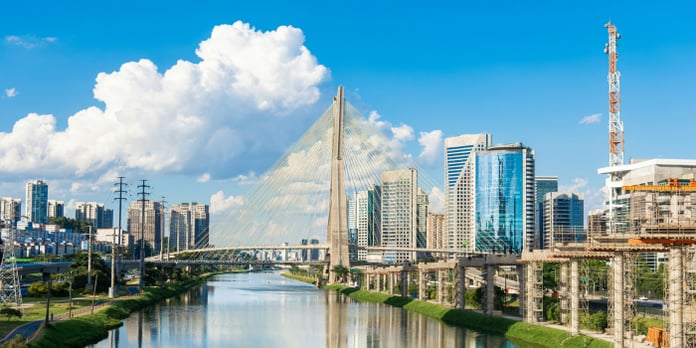
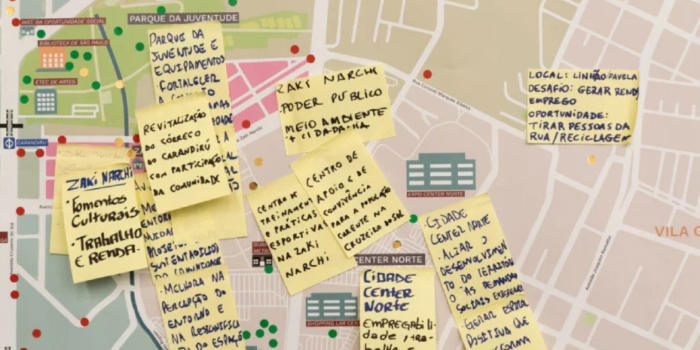
In São Paulo’s North Zone, a major business hub sits alongside neighbourhoods where a significant number of the city’s most vulnerable people live on the street. With our support, a convening alliance came together to address the area’s social and environmental challenges: the business hub and its foundation, a national retailer, a small-business support agency and the local sub-prefecture. They invited police, health workers, city workers, faith leaders and NGOs to join them. Before any planning began, each participant was interviewed individually so they arrived feeling heard. The group then spent time getting to know each other and the area, including a joint visit to a neighbourhood where around 700 families live in very poor conditions. One of the convenors described the street separating the business hub from the rest of the area as a wall that shouldn’t exist. Within weeks, they cleaned sewers and replaced streetlights in neglected areas. The work went on to produce a forum for older residents, a cross-sector proposal for a local park and a river restoration initiative. The same convenor described the trust built within the group as the most important outcome. Read the story
For cities, this suggests that trust is part of the infrastructure needed for change. When public debate is polarised, investing in relationships is not a preliminary step to rush through, but the foundation that makes working across differences possible.
How we support cities to move forward together
Across these patterns, the common thread is that progress depends on the conditions for collaboration. Our work focuses on creating those conditions, and at the city level it mostly takes three forms.
We help cities reimagine their future
Where cities face long-term transitions and hard trade-offs, we help them explore possible futures together with the people who will live with the consequences and whose involvement is needed to shape them: residents, businesses, community groups, public institutions and, where relevant, Indigenous nations. Our Transformative Scenarios Process combines imagination and rigour. It is particularly useful when people need to work on a challenge together but disagree on the nature of the problem itself, which can leave situations polarised or stuck. Developing scenarios together gives a city a shared language for discussing difficult choices and a way to test strategies against multiple futures. This allows people to make decisions with greater confidence, even when the future remains uncertain.
We enable collaborative innovation
Where responsibilities are split across organisations, and plans depend on many actors to carry them out, we bring together people who don’t usually work together. The group builds a shared picture of the problem and invests in the relationships needed to work on it. It then designs, tests and adapts practical responses through processes such as Social Labs and Accelerators. Because responses are tested in practice, the group learns quickly what works. Successful experiments can be scaled, and those that fall short show where to adjust. Over time, the people involved build the relationships, evidence and shared ownership needed to sustain change.
We strengthen cross-mandate leadership
Where the levers for change sit across departments, agencies and levels of government, no single leader owns the issue, yet each answers to their own mandate, budget and reporting lines. Progress then depends on leaders who can see the whole, build relationships across divides, and act together when no one is fully in charge. This is what we mean by systems leadership. We support city leaders and their counterparts in regional and national government, business and civil society in developing three capacities:
- Acting from the whole: understanding the wider system they are part of, and seeing where their efforts connect or collide.
- Collaborating across differences: working with people they don’t agree with, don’t like or don’t trust, including those beyond their direct control.
- Experimenting to find a way forward: trying things out when no one can know the answer in advance.
Underpinning all three is recognising one’s own role in the system: each of us is part of the situation we are trying to change. These capacities allow leaders to work together more effectively within their existing mandates and budgets, and to make visible where the structures themselves need to change.
Where this work is happening now
Each of these approaches is at work in our current projects with cities and city networks.
- HeatLab Europe, Athens Athens faces some of the most severe summer heat of any European capital and, in 2021,, and in 2021 became the first European city to appoint a Chief Heat Officer. As a founding partner of HeatLab Europe, launched in Athens, we are co-designing and facilitating the lab with Mindworks and the European Climate Foundation. It brings together journalists, emergency responders, scientists and community members to co-create practical preparedness tools, from evacuation and emergency journey maps to communication guidelines. Alongside this practical work, the lab develops the longer-term narratives of adaptation and collective confidence a city needs to sustain resilience over time. The model is designed to be adapted by other municipalities facing rising heat risk.
- Carbon Neutral Cities Alliance: Designing Urban Climate Governance for Regenerative Futures With CNCA, we are working with a network of cities committed to ambitious climate action to explore how urban climate governance can support regenerative futures, treating nature as a central consideration in decision-making rather than a technical add-on.
Curious? Let's have a conversation.
If any of these patterns feel familiar in your city or city network, we would welcome a conversation about what might help.